
Natural Health Solutions
Natural Constipation Relief in Pakistan: Home Remedies for Fast Relief
Feb
Constipation, or قبض in Urdu, is a common issue faced by people worldwide, including Pakistan. It refers to infrequent or painful bowel movements, often accompanied by discomfort or bloating. Natural constipation relief in Pakistan is highly achievable with the right diet, hydration, exercise, and a few effective home remedies.
What Is Constipation (قبض)?
Constipation occurs when your bowel movements become infrequent or difficult to pass. People typically experience fewer than three bowel movements a week, along with symptoms such as abdominal pain, bloating, and hard stools.
It can be caused by a range of factors, including dehydration, a lack of fiber in the diet, and even stress.In Pakistan, قبض is a common complaint, particularly due to diet and climate conditions.
Common Causes of Constipation in Pakistan
In Pakistan, the causes of constipation are often related to diet and lifestyle. The high consumption of fried, oily foods like pakoras, along with low fiber intake, can lead to digestive issues.Inadequate water consumption, especially during hot summers, can also cause dehydration, making bowel movements harder.
Furthermore, limited physical activity and the tendency to skip meals during busy schedules can exacerbate constipation. Understanding these factors is essential in preventing and addressing the problem effectively and achieving natural constipation relief in Pakistan.
Quick Natural Remedies for Constipation (Fast Relief)
When looking for quick relief from constipation, several natural remedies can be very effective. These include:
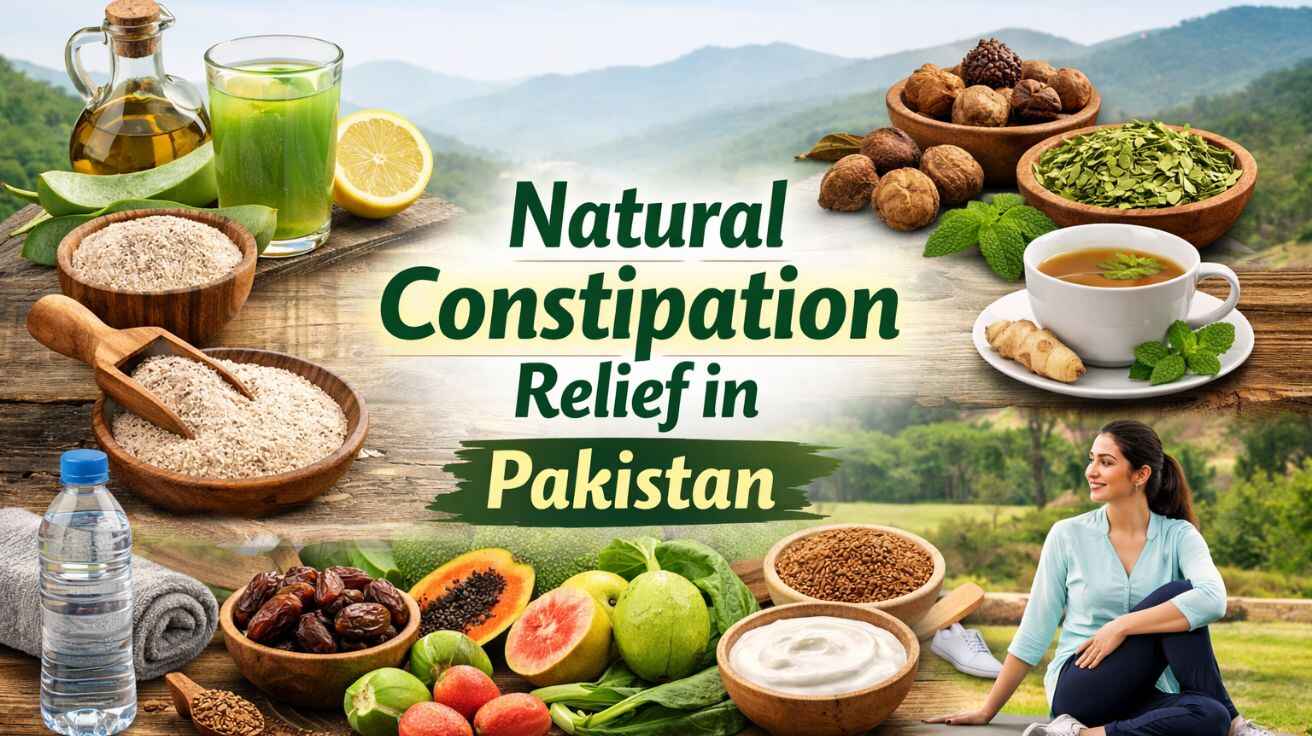
- Hydration: Drinking plenty of water is crucial. Warm water, in particular, helps stimulate the digestive system.
- Olive Oil: A tablespoon of olive oil on an empty stomach can help lubricate the intestines and relieve constipation.
- Lemon Water: A glass of lukewarm water with lemon every morning can stimulate the digestive system and help bowel movements.
- Aloe Vera Juice: Known for its laxative properties, aloe vera juice is a natural remedy that can aid digestion.
- Isabgol (Psyllium Husk): Common in Pakistani homes, isabgol is a fiber-rich supplement that softens stool and promotes regularity. Taking it with warm water can be especially beneficial.
Top Foods That Help Constipation
Pakistan offers several local foods that can help alleviate constipation by boosting fiber intake and promoting digestion:
- Fruits: Dates, papayas, and guavas are excellent sources of fiber that promote healthy bowel movements. Dates, in particular, are a powerful natural laxative.
- Vegetables: High-fiber vegetables like spinach, cauliflower, and carrots are great choices for a constipation-friendly diet.
- Flaxseeds: Ground flaxseeds added to your daily diet can provide both fiber and omega-3 fatty acids that promote digestive health.
- Yogurt (Dahi): The probiotics in yogurt improve gut health and help regulate bowel movements.
- Whole Grains: Brown rice, oats, and whole wheat are rich in fiber, which adds bulk to stool and makes it easier to pass.
Including these fiber-rich foods in your diet is one of the best ways to achieve natural constipation relief in Pakistan.
Herbal Remedies for Constipation
In addition to fiber-based remedies, herbal options can also provide significant relief. These include:
- Triphala: A well-known Ayurvedic herbal remedy made from three fruits (amla, haritaki, and bibhitaki). It promotes digestion and regular bowel movements.
- Senna: A natural herbal laxative commonly used in Pakistan, Senna can help promote regular bowel movements. However, it should be used sparingly to avoid dependency.
- Ginger Tea: Ginger is known to improve digestion and soothe the stomach. Drinking ginger tea can help stimulate bowel movement.
- Mint Tea: Mint is another great herb that aids digestion and relieves bloating. A warm cup of mint tea can help with constipation relief.
These herbal remedies, when combined with high-fiber foods, offer natural constipation relief in Pakistan and can make a significant difference in your digestive health.
Daily Routine for Relief & Prevention
Adopting a daily routine focused on digestive health can significantly reduce constipation over time:
- Start your day with water: Drinking a glass of water as soon as you wake up helps jump-start digestion.
- Incorporate fiber: Ensure every meal contains high-fiber foods, especially fruits, vegetables, and whole grains.
- Exercise regularly: Physical activity helps stimulate bowel movements. Simple activities like walking or yoga can be very effective.
- Establish a routine: Try to go to the bathroom at the same time every day, even if you don’t feel the urge. Consistency helps regulate bowel movements.
- Avoid processed foods: Limit consumption of fried and processed foods that lack fiber and can contribute to constipation.
With a consistent routine, you can maintain your digestive health and find natural constipation relief in Pakistan more easily.
Gym & Exercise Tips (Daily Movement)
Regular physical activity is one of the best ways to prevent constipation. Exercise stimulates the intestines, helping to move stool through the digestive tract. Aim for at least 30 minutes of moderate exercise every day. Simple activities like walking, jogging, cycling, or even a gentle yoga session can help improve bowel function. Incorporating exercises like abdominal twists and stretches can further encourage better digestion.
Safety & Side Effects to Watch
While natural remedies are generally safe, it’s important to follow proper dosages and use caution with certain methods:
- Olive Oil: Excessive use can cause diarrhea or stomach cramps.
- Aloe Vera: Aloe can be a mild laxative, but it may cause cramping if taken in large amounts.
- Isabgol: Always drink plenty of water when consuming isabgol, as it can cause bloating and discomfort if not hydrated properly.
- Herbal Laxatives: Natural laxatives should be used sparingly. Overuse can lead to dependence and may worsen constipation in the long term.
FAQs
1. What are the fastest natural ways to relieve constipation?
To relieve constipation quickly, try drinking warm water with lemon, consuming aloe vera juice, or taking a tablespoon of olive oil on an empty stomach. These remedies help stimulate bowel movements and lubricate the digestive tract.
2. Which Pakistani foods help with bowel movements?
Foods like dates, papayas, guavas, and high-fiber vegetables such as spinach and carrots can aid digestion and relieve constipation. Dates, in particular, are a powerful natural laxative.
3. Can isabgol help constipation?
Yes, isabgol (psyllium husk) is a highly effective remedy for constipation in Pakistan. It is rich in soluble fiber, which softens stool and promotes regular bowel movements.
4. Is dehydration a major cause of قبض?
Yes, dehydration is one of the main causes of constipation. When the body is dehydrated, stool becomes hard and difficult to pass. Drinking enough water is essential for preventing and relieving constipation.
5. Are herbal laxatives safe?
Herbal laxatives, when used appropriately, can provide relief from constipation. However, they should be used cautiously and not relied on long-term, as they can lead to dependency.
6. When should I see a doctor for constipation?
If constipation persists for more than a week, or if it is accompanied by severe pain, blood in the stool, or other unusual symptoms, it is important to consult a doctor for further evaluation.